Northern Water Snake: Facts, Habitat, and How to Identify This Helpful Reptile
Have you ever been walking near a pond and seen a dark shape slip into the water? Most of the time, that swimmer is the Northern Water Snake. These snakes are some of the most common reptiles you will find near lakes, rivers, and marshes across North America. While they might look a little scary at first glance, they are actually a vital part of our local ecosystems. I remember the first time I saw one basking on a log; it sat so still I thought it was a piece of driftwood!
The Northern Water Snake is a fascinating creature that spends most of its life around the water’s edge. Even though many people get nervous when they see them, these snakes aren’t out to get you. In fact, they would much rather dive deep and hide than have a chat with a human. Understanding them is the best way to lose that fear. In this guide, we will dive into everything you need to know about their lives, from what they eat to how you can tell them apart from their more “famous” venomous cousins.
Complete Biography of the Northern Water Snake
| Feature | Details |
| Common Name | Northern Water Snake |
| Scientific Name | Nerodia sipedon |
| Family | Colubridae |
| Average Size | 24 to 42 inches (up to 4.5 feet) |
| Lifespan | 9–10 years in captivity (unknown in wild) |
| Diet | Carnivore (fish, frogs, tadpoles, insects) |
| Habitat | Lakes, ponds, rivers, marshes, and bogs |
| Reproduction | Viviparous (gives birth to live young) |
| Conservation Status | Least Concern (stable population) |
| Active Period | Diurnal (mostly active during the day) |
How to Identify a Northern Water Snake
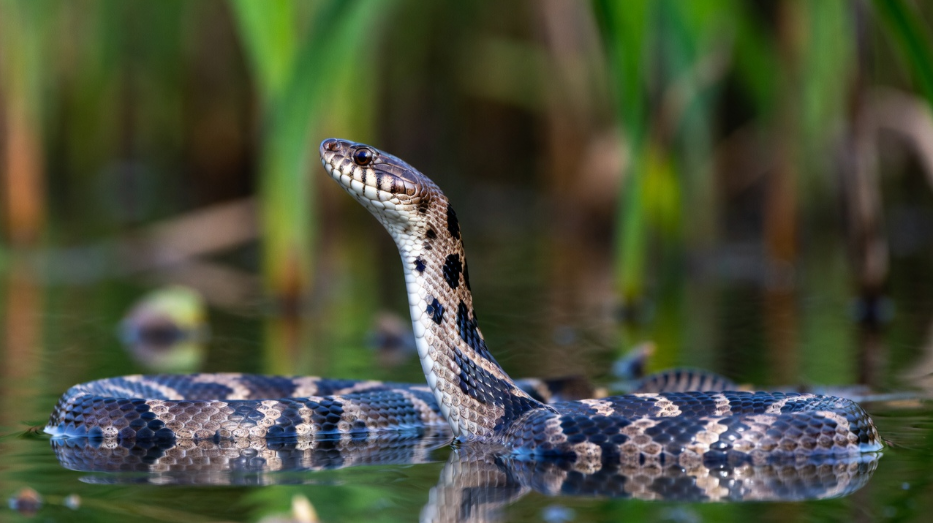
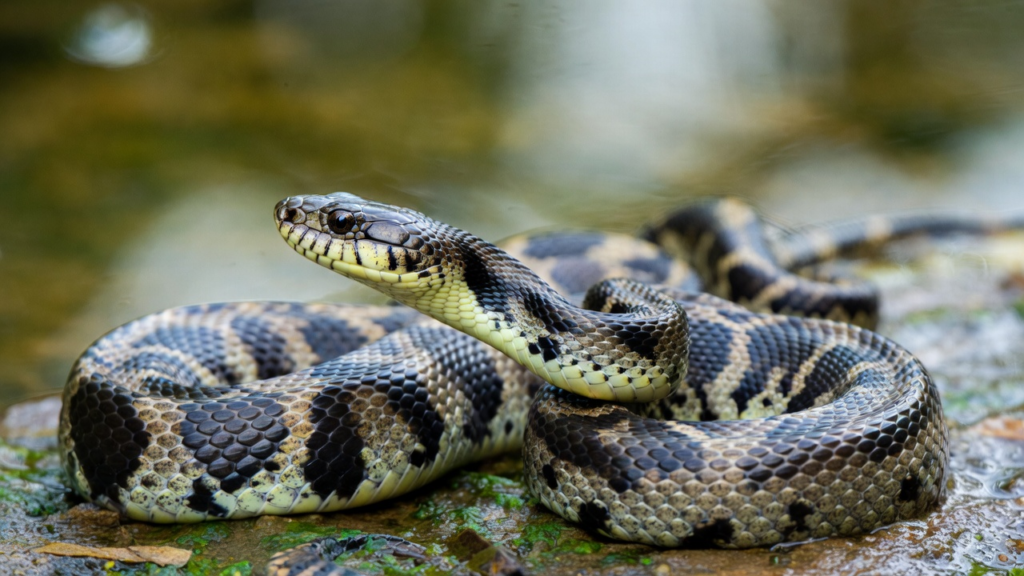
Identifying a Northern Water Snake can be a bit of a puzzle because their colors change as they grow. When they are young, they have very bright bands of brown, gray, or tan. As they get older, these colors darken. Some adults look almost solid black or dark brown, making their patterns hard to see unless they are wet and sitting in the sun. Their scales are “keeled,” which means they have a little ridge down the center, giving them a rough, non-shiny texture.
One of the best ways to spot a Northern Water Snake is by looking at its head and eyes. They have round pupils, unlike the cat-like slits found in venomous pit vipers. Their heads are also relatively slender and only slightly wider than their necks. If you see a snake with a series of dark crossbands near the head that turn into blotches toward the tail, you are likely looking at this common water-dweller. They are the ultimate masters of camouflage in muddy water!
Where Does the Northern Water Snake Live?
The Northern Water Snake is not very picky about its home, as long as there is plenty of water nearby. You can find them in almost any freshwater environment, including slow-moving streams, large lakes, and even small backyard ponds. They love areas with lots of vegetation or piles of rocks where they can hide from predators. I often see them draped over tree branches hanging over the water, ready to drop in at the first sign of danger.
In the winter, these snakes don’t just disappear; they go into a state called brumation. The Northern Water Snake will find a cozy spot in a rock crevice, a mammal burrow, or even a beaver lodge to sleep through the cold months. They sometimes even share these winter dens with other types of snakes. Once the spring sun warms the ground, they emerge to find food and a mate, starting their busy cycle all over again in the wetlands they call home.
What’s on the Menu? (Diet and Hunting)
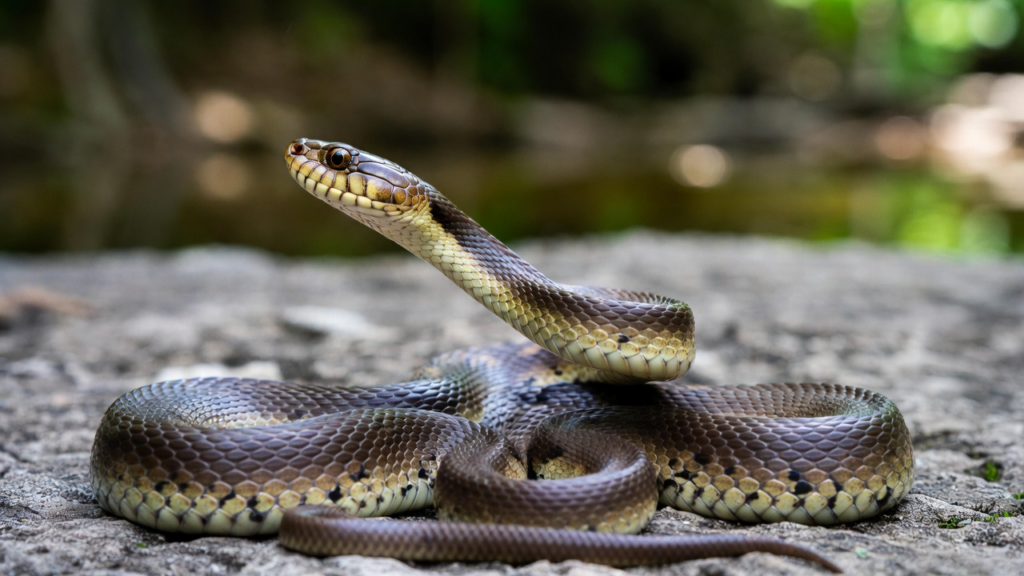
The Northern Water Snake is a skilled hunter that plays a huge role in keeping fish populations healthy. Their diet consists mostly of small fish, frogs, and salamanders. They are also known to eat “rough fish” like suckers or diseased fish that might otherwise spread sickness in a pond. By eating these, they act like a natural cleaning crew for our waterways. They don’t use venom or constriction; they simply grab their prey with sharp teeth and swallow it whole.
Interestingly, the Northern Water Snake has a very clever way of fishing. Sometimes, they will swim through a school of small fish with their mouths wide open, hoping to catch a snack. Other times, they use their bodies to “herd” tadpoles or minnows toward the shallow shore where they are easier to catch. While they mostly hunt during the day, they are known to be active at night during the hot summer months to stay cool while they search for a meal.
Is it a Water Moccasin? (Avoid Mistaken Identity)
The biggest problem for the Northern Water Snake is that it looks a lot like the venomous Cottonmouth, also known as the Water Moccasin. Because of this, many of these harmless snakes are killed by people who are afraid. However, there are easy ways to tell them apart. First, check the eyes; our water snake has round pupils, while the Moccasin has vertical slits. Also, the Northern Water Snake swims with its body mostly submerged, while a Moccasin usually floats high on top of the water like a cork.
Another key difference is their range. The Northern Water Snake lives much further north than the Cottonmouth. If you are in Canada or the northern United States, you are almost certainly looking at a harmless water snake! When a Northern Water Snake feels scared, it might flatten its head to look bigger and meaner, but it’s just a bluff. They would much rather swim away than get into a fight. Always remember: if you leave a snake alone, it will leave you alone!
The Secret Life of Baby Northern Water Snakes
Unlike many other reptiles that lay eggs in the sand or dirt, the Northern Water Snake gives birth to live babies! This is called being “viviparous.” In late summer or early autumn, a mother snake can give birth to a large litter, sometimes as many as 30 to 60 “neonates.” These babies are born fully independent and ready to take on the world. They are often much more brightly colored than their parents, with bold black and white or red patterns.
Life is tough for a tiny Northern Water Snake. Because they are only about 7 to 10 inches long at birth, they have a lot of predators. Large fish, bullfrogs, and even birds like herons see them as a tasty snack. To survive, they stay very close to thick weeds and shallow water where big predators can’t reach them. It takes about two or three years for them to grow up and start having families of their own.
Understanding Their Unique Defensive Behaviors
If you ever try to pick up a Northern Water Snake, you’re in for a smelly surprise! These snakes have a very effective defense mechanism: they release a foul-smelling musk from their tails. This “stink” is meant to convince a predator that the snake is gross and not worth eating. They might also defecate or even regurgitate their last meal to get away. It’s a messy tactic, but it works wonders in the wild!
Besides the smell, a Northern Water Snake will defend itself by biting if it feels cornered. While they aren’t venomous, their saliva contains a mild anticoagulant that makes a small scratch bleed more than usual. This is why it’s always better to watch them from a distance. I always tell hikers that a snake’s “aggression” is actually just fear. They aren’t trying to be mean; they are just trying to stay alive in a world full of giants!
The Importance of Conservation and Respect
The Northern Water Snake is currently listed as “Least Concern,” which means their numbers are healthy. However, they still face threats like habitat loss and water pollution. When we build roads through wetlands or pollute lakes with chemicals, it hurts the fish and frogs they rely on for food. Protecting our wetlands means protecting the snakes, too. They are essential indicators of a healthy environment, and a pond with water snakes is usually a thriving one.
We can help the Northern Water Snake by teaching others that they are harmless and helpful. Instead of reaching for a shovel, we should reach for a camera! By sharing photos and facts about these amazing animals, we can change the way people think about them. They aren’t “pests”—they are the guardians of our rivers and the stars of our local wetlands. Let’s give them the space they need to keep our ecosystems in balance.
Fun Facts About the Northern Water Snake
Did you know that a Northern Water Snake can stay underwater for over an hour? They are incredible divers! Here are a few more quick facts:
- They can “smell” with their tongues to find prey hiding in the mud.
- Their scientific name, Nerodia sipedon, comes from Greek and Latin words meaning “water nymph” and “siphon.”
- They often bask in groups to share body heat during the cool spring days.
- They don’t have ears, but they can feel vibrations in the ground and water from quite a distance.
Frequently Asked Questions (FAQs)
1. Is the Northern Water Snake venomous?
No, the Northern Water Snake is completely non-venomous. They do not have fangs or venom glands. While they can bite if they feel threatened, it is not dangerous to humans or pets beyond a small scratch.
2. Can Northern Water Snakes bite underwater?
Yes, they can! Since they hunt fish and frogs in the water, they are perfectly capable of opening their mouths and biting while submerged. However, they only bite humans if they are being handled or stepped on.
3. How big do Northern Water Snakes get?
Most adults are between 2 and 3.5 feet long. However, some very healthy females can grow up to 4.5 feet. Females are almost always larger and heavier than the males.
4. What should I do if I find one in my yard?
The best thing to do is simply leave it alone. The Northern Water Snake is likely just passing through to find a nearby water source or hunting for garden pests. It will eventually move on by itself.
5. Do they live in the ocean?
No, the Northern Water Snake is a freshwater species. While they can sometimes be found in “brackish” water (a mix of fresh and salt water) near the coast, they cannot survive in the high salinity of the open ocean.
6. Why do they look so much like Copperheads?
The banding pattern on a young Northern Water Snake can look similar to a Copperhead. However, Copperheads have “hourglass” shapes on their sides and live in dry, rocky woods rather than in the water.
Conclusion: Appreciating Our Scaly Neighbors
The Northern Water Snake is a misunderstood hero of the North American wetlands. From their clever hunting skills to their role as a “clean-up crew” for our lakes, they provide a great service to nature. By learning how to identify them and understanding their behaviors, we can move past our fears and appreciate the beauty of these reptiles. The next time you see one sunning itself on a rock, take a moment to admire its resilience and its place in the great web of life.