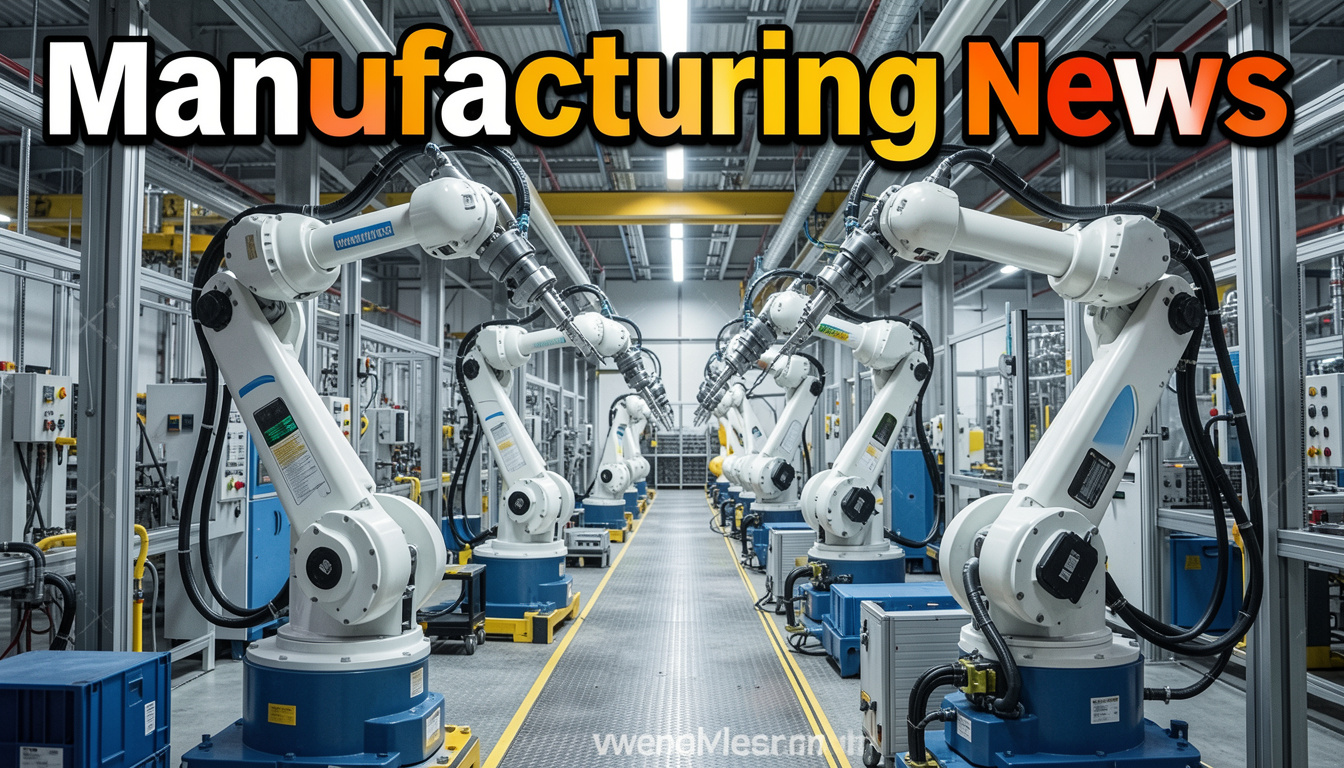
Japan Manufacturing News 2026: Robots, AI, & Future Trends
Hello there! If you are curious about how the things we use every day are made, you have come to the right place. Japan has always been a world leader in making high-quality products. From the cars we drive to the chips inside our phones, the japan manufacturing news coming out this year is truly exciting. In this article, we will look at how Japanese factories are changing and why this matters to you.
Japan is currently going through a big transformation. They are blending their famous “Monozukuri” (the art of making things) with brand-new digital tools. This mix is helping them solve big problems like labor shortages and environmental goals. Let’s dive into the most important updates in manufacturing news and see what is happening in the Land of the Rising Sun!
What is the Big Story in Japan Manufacturing News Right Now
The biggest story in japan manufacturing news today is the massive rebound of factory activity. In early 2026, Japan’s manufacturing growth hit a four-year high (Trading Economics, 2026). This means factories are busier than they have been in a long time. People all over the world want Japanese goods again, and companies are working hard to keep up.
This growth is especially strong in sectors like motor vehicles and electronics. Even with some global supply chain issues, Japanese makers have found ways to stay steady. They are focusing on being resilient, which means they can handle surprises better than before. It is a great time to watch how these industrial giants adapt to a changing world.
The Rise of Smart Factories and AI
One of the coolest parts of manufacturing news is the “Smart Factory” movement. Japanese companies are now using Artificial Intelligence (AI) to run their assembly lines. These smart systems can predict when a machine might break before it actually does! This saves a lot of time and money, making the whole process much smoother.
At the CES 2026 event, many Japanese startups showed off “AI-native” designs (Autonomy Global, 2026). This includes things like 3D printing software that understands human speech. Imagine telling a computer to “make a bracket for a drone,” and it just does it! This is not science fiction anymore; it is happening right now in Japan.
Robotics: Japan Remains the World Leader
Japan is still the number one robot maker in the world. New japan manufacturing news highlights that robots are becoming more like humans. We call these “humanoid robots.” In 2026, these robots are being moved from laboratories into real factory floors to help move heavy items and assemble delicate parts (International Federation of Robotics, 2025).
The focus for 2026 is on “Agentic AI,” which helps robots work independently in messy, real-world environments. Instead of just doing the same task over and over, these robots can learn and adapt. This helps Japan deal with its aging population because robots can fill the gaps where there aren’t enough human workers.
Semiconductor Independence: A New Strategy
You might have heard about “chips” or semiconductors. They are the brains of every electronic device. A major update in manufacturing news is Japan’s push to make more of these chips at home. The government has approved billions of yen to support companies like Rapidus to build advanced 2-nanometer chips (The News, 2026).
By making these chips in Japan, the country doesn’t have to rely as much on other nations. This is a big move for “economic security.” It ensures that Japanese car makers and tech firms always have the parts they need to keep their production lines moving, even if there are global trade issues.
The Green Revolution: Sustainable Manufacturing
Being eco-friendly is a top priority in the latest japan manufacturing news. Companies are trying to reach “Net Zero” carbon emissions. This means they want to make things without hurting the planet. They are using more renewable energy, like solar and wind, to power their massive plants.
Additionally, Japan is investing in “critical minerals” supply chains for electric vehicle batteries (Asian Development Bank, 2026). They are working with other countries to make sure they have the materials needed for a green future. This focus on sustainability is helping Japanese brands stay popular with shoppers who care about the environment.
How Japanese Brands are Performing in 2026
If we look at the business side of manufacturing news, famous brands like Toyota and Sony are doing very well. In fact, Toyota remains Japan’s most valuable brand, valued at over $30 billion (Kantar, 2026). These companies are successful because they focus on quality and new technology.
Other brands like Uniqlo and Asics are also growing fast. They are using smart logistics and digital marketing to reach people all over the globe. Even though the world economy can be tricky, these Japanese manufacturers are showing that being “selective” and “resilient” is the secret to staying on top (Brand Finance, 2026).
Major Manufacturing Hubs: Where the Action Happens
When we talk about japan manufacturing news, we often look at specific cities. Tokyo, Osaka, and Nagoya are the heart of the industry. These cities host huge trade shows, like Manufacturing World Tokyo, where thousands of experts meet to share new ideas (Manufacturing World, 2026).
Nagoya is famous for cars, while Osaka is a leader in chemicals and electronics. These hubs are like giant engines that power the country. By keeping these areas strong, Japan ensures that it remains a global powerhouse in the industrial world.
Overcoming Challenges: Labor and Costs
It’s not all easy news. A common theme in manufacturing news is the rising cost of materials. Because of global conflicts and trade issues, things like energy and raw materials have become more expensive. This makes it harder for factories to keep prices low for customers.
To fight this, Japanese firms are hiring more people and using more automation. They are also dealing with a “weaker yen,” which makes it cheaper for people in other countries to buy Japanese goods but more expensive for Japanese factories to buy materials from abroad. It’s a delicate balance!
The Role of Digital Transformation (DX)
“DX” stands for Digital Transformation, and it is a buzzword you will see in every japan manufacturing news report. This is about more than just using computers. It is about changing how a company works from the inside out. It involves using “Big Data” to understand what customers want.
By using digital twins—which are virtual copies of a real factory—engineers can test new ideas on a computer before they try them in real life. This prevents mistakes and makes the factory much more efficient. This digital shift is why Japan is staying ahead of the competition.
Future Outlook: What to Expect Next
Looking forward, the manufacturing news suggests that Japan will continue to blend tradition with high-tech tools. We will see more electric cars, smarter robots, and even factories that operate in space! Startups are already looking at how to manufacture materials in microgravity (Autonomy Global, 2026).
The goal for the future is to create a “virtuous cycle” where better wages lead to better products and a stronger economy. As long as Japan keeps innovating, it will remain at the center of the world’s manufacturing stage.
Conclusion
In conclusion, the japan manufacturing news for 2026 shows a country that is moving fast into the future. By using AI, robots, and green energy, Japan is making sure that “Made in Japan” still stands for quality and innovation. Whether it is a new car or a tiny computer chip, the way these things are made is changing for the better.
What do you think about robots working in factories? Does it make you feel excited for the future? We would love to hear your thoughts! Stay tuned for more updates on the world of making things.
FAQs
1. Is Japan still the leader in robotics?
Yes! According to the latest japan manufacturing news, Japan remains the world’s top robot maker, especially in humanoid and AI-driven industrial robots (International Federation of Robotics, 2025).
2. Why is Japan investing so much in semiconductors?
Japan wants to ensure it has its own supply of chips for cars and tech. This “semiconductor independence” helps protect their economy from global supply shortages (The News, 2026).
3. Are Japanese factories becoming more eco-friendly?
Absolutely. Most manufacturing news reports highlight a shift toward renewable energy and sustainable materials to reach global climate goals by 2050.
4. What is a “Smart Factory”?
A smart factory is one that uses AI and the “Internet of Things” (IoT) to monitor production. It can fix its own problems and work more efficiently than a traditional factory.
5. How is the “weaker yen” affecting manufacturing?
A weak yen makes Japanese exports cheaper for other countries to buy, which boosts sales. However, it also makes it more expensive for Japan to buy the raw materials it needs from overseas.
6. Where are the main manufacturing hubs in Japan?
The key areas are Tokyo, Nagoya, and Osaka. These cities are home to the biggest automotive, electronic, and chemical plants in the country (Manufacturing World, 2026).
References
- Asian Development Bank. (2026). ADB Launches Initiative to Build Asia’s Critical Minerals Supply Chains. ADB News Release. https://www.adb.org/news/adb-launches-initiative-build-asia-critical-minerals-supply-chains
- Autonomy Global. (2026). Japan’s Next Wave of Autonomy: Show-Stopping Tech from CES 2026. Autonomy Global Reports. https://www.autonomyglobal.co/japans-next-wave-of-autonomy-show-stopping-tech-from-ces-2026/
- Brand Finance. (2026). Nearly 40% of Japanese brands ranked in Global 500 record double-digit growth. Brand Finance Press. https://brandfinance.com/press-releases/nearly-40-of-japanese-brands-ranked-in-global-500-record-double-digit-growth-in-2026
- International Federation of Robotics. (2025). Japan is World´s number one Robot Maker. IFR News. https://ifr.org/news
- Kantar. (2026). Kantar BrandZ Most Valuable Japanese Brands 2026. Kantar Inspiration. https://www.kantar.com/inspiration/brands/japans-most-valuable-brands-2026
- The News. (2026). Japan boosts semiconductor push to shield global supply chains. The News International. https://www.thenews.com.pk/latest/1398521-japan-boosts-semiconductor-push-to-shield-global-supply-chains-heres-why
- Trading Economics. (2026). Japan Manufacturing Growth Hits Over 4-Year High. Trading Economics Data. https://tradingeconomics.com/japan/manufacturing-pmi/news/544110