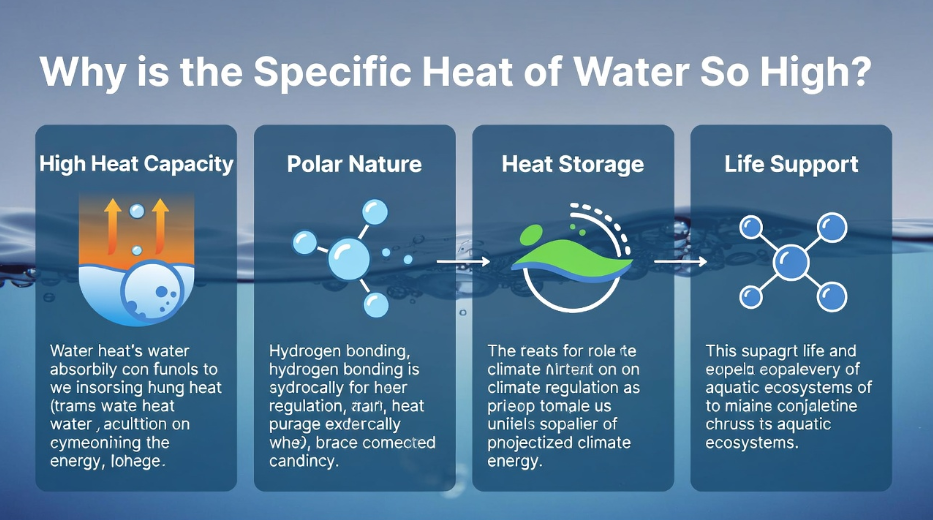
Why is the Specific Heat of Water So High? A Simple Guide
Have you ever jumped into a swimming pool on a burning hot summer day? Even though the sun has been beating down all morning, the water feels nice and chilly. This happens because of something called the specific heat of water. In simple terms, this is a measure of how much heat energy a substance needs to get hotter. Water is like a giant sponge for heat. It can soak up a ton of energy before it actually starts to feel warm.
Because the specific heat of water is so high, it doesn’t change temperature as fast as metal or sand. This is why the sidewalk might burn your feet while the pool stays refreshing. Scientists say it takes 4.18 Joules of energy to raise one gram of water by just one degree Celsius. That might sound like a small number, but in the world of science, it is actually huge! Water is one of the best “heat shields” on our entire planet.
Quick Facts: The Biography of Water
| Feature | Details |
| Common Name | Water ($H_2O$) |
| Specific Heat Capacity | $4.184\text{ J/g°C}$ |
| Boiling Point | $100\text{°C}$ ($212\text{°F}$) |
| Freezing Point | $0\text{°C}$ ($32\text{°F}$) |
| Main Job | Regulating Earth’s temperature |
| Special Skill | Absorbing lots of heat slowly |
Why Water Takes a Long Time to Boil
If you have ever waited for a pot of water to boil for pasta, you know it feels like it takes forever. This is a perfect example of the specific heat of water in action. You are blasting it with fire, yet the temperature creeps up slowly. This is because water molecules are held together by “hydrogen bonds.” These bonds are like tiny pieces of sticky tape. Before the water can get hot and turn into steam, the heat has to break those sticky bonds first.
Most other liquids don’t have these strong bonds, so they get hot much faster. Because the specific heat of water is so high, it acts as a buffer. It protects things from getting too hot too fast. This slow heating process is actually a great thing for our world. If water boiled instantly, cooking would be a disaster, and our oceans would be in big trouble!
How Water Keeps Our Planet Cool
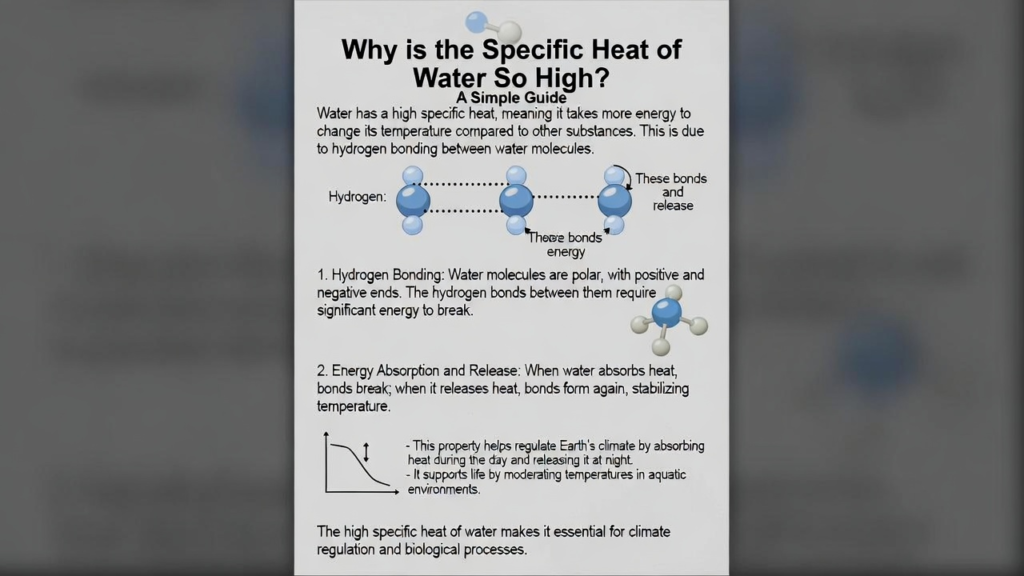
The Earth is mostly covered in oceans, and those oceans use the specific heat of water to save us. During the day, the sun hits the Earth with a lot of heat. If we lived on a rocky planet with no water, the ground would get hot enough to cook an egg. However, our oceans soak up most of that solar energy. The specific heat of water allows the sea to stay cool even when the sun is very bright.
At night, when the sun goes away, the oceans slowly release that stored heat back into the air. This keeps the world from freezing every single night. This balance is why coastal cities usually have such nice weather. They don’t get too hot in the summer or too cold in the winter. We really owe our comfortable lives to the high specific heat of water and how it manages the global climate.
The Role of Water in Your Body
Did you know that your body is mostly made of water? This is a very smart design by nature. Because of the specific heat of water, your internal body temperature stays steady. Even if you walk outside on a hot day, your blood doesn’t just start boiling. The water in your cells absorbs the extra heat and keeps you safe. This is part of how humans stay healthy in different environments.
If our bodies were made of something with a low specific heat, like oil or alcohol, we would overheat very quickly. The specific heat of water acts like a built-in air conditioner for your organs. When you get too warm, you sweat. As that water evaporates, it takes even more heat away with it. It is amazing how much one simple property of water helps us stay alive every day.
Comparing Water to Other Materials
To really understand the specific heat of water, it helps to look at other things around us. Think about a metal spoon sitting in a hot bowl of soup. The spoon gets hot almost instantly! This is because metals have a very low specific heat. They don’t need much energy to change temperature. Water, on the other hand, needs about ten times more energy than iron to warm up.
This difference is why we use water in car radiators and cooling systems. Because the specific heat of water is so high, it can carry heat away from a hot engine without turning into gas. It is the champion of cooling. Whether it is in a car, a factory, or a power plant, water is the number one choice for moving heat around safely and effectively.
Why Fish Love High Specific Heat
Imagine being a fish living in a lake. If the air temperature drops from $80\text{°F}$ to $40\text{°F}$ in one night, you might worry the water would freeze. But thanks to the specific heat of water, the lake temperature barely changes at all. It takes weeks of cold weather for a large body of water to actually cool down. This gives the fish a stable, cozy home all year long.
This stability is vital for underwater life. Most aquatic animals cannot survive if the temperature swings wildly. The specific heat of water acts like a thick blanket that keeps their environment steady. Even in the middle of a snowy winter, the water deep down stays liquid and safe. It is one of the many ways nature protects its creatures using simple science.
Specific Heat and the Four Seasons
Have you noticed that the beach is often cold in the spring but warm in the fall? This is all because of the specific heat of water. In the spring, the water is still holding onto the cold from winter. It takes the whole summer for the sun to finally warm it up. By the time autumn arrives, the water has soaked up all that summer heat. It stays warm even as the leaves start to fall.
This “lag” in temperature is a direct result of the specific heat of water. It creates a delay between the air temperature and the water temperature. Farmers love this because it prevents late frosts from killing their crops near large lakes. The warm water keeps the nearby air just warm enough to protect the plants. It is a natural heating system that never needs a battery!
The Science of Hydrogen Bonds
If we look through a microscope, we see that water is made of oxygen and hydrogen. These atoms like to stick together. The specific heat of water is high because these “hydrogen bonds” are very stubborn. They don’t want to let go! When you add heat, the molecules vibrate, but the bonds hold them in place. It takes a lot of “shaking” (heat energy) to make them move faster.
Since temperature is just a measure of how fast molecules are moving, water stays “cool” until you provide enough energy to overcome those bonds. This is the secret recipe that gives water its unique powers. No other common liquid on Earth has bonds quite like these. Without the specific heat of water being exactly what it is, life on our planet might not even exist.
How We Measure Specific Heat
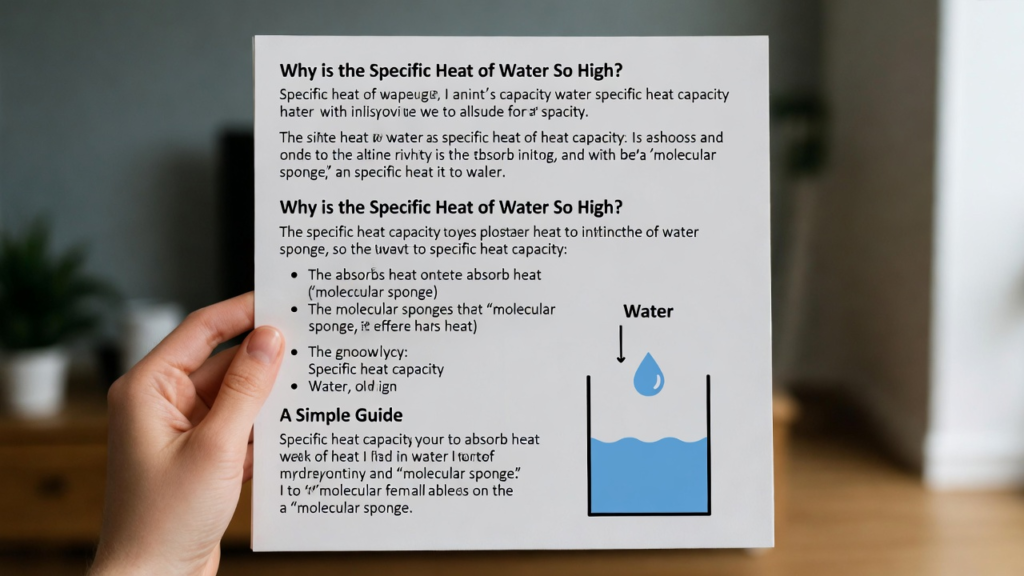
Scientists use a special tool called a “calorimeter” to measure the specific heat of water. They put a known amount of water inside and add a specific amount of heat. By watching how much the temperature rises, they can calculate the heat capacity. This is very important for engineers who build things like heaters or refrigerators. They need to know exactly how water will behave.
Even though it sounds like a hard science experiment, you see it in your kitchen. When you use a double boiler to melt chocolate, you are using the specific heat of water to provide gentle, steady heat. The water keeps the chocolate from burning because it won’t get hotter than its boiling point. It is a simple tool that we use every day without even thinking about it.
Why Is This Important for the Future?
As our planet changes, understanding the specific heat of water is more important than ever. The oceans are soaking up a lot of the extra heat from global warming. Because the specific heat of water is so high, the oceans have kept the Earth from getting much hotter than it already is. They are acting like a giant sponge for the entire world’s climate.
However, even a sponge has its limits. If the oceans get too warm, it can change weather patterns and hurt coral reefs. We study the specific heat of water to predict what might happen next. By knowing how water holds heat, we can better protect our homes and the animals we love. It is a tiny detail of science that has a huge impact on our future.
Frequently Asked Questions
1. What is the actual value of the specific heat of water?
The standard value used by scientists is $4.184\text{ Joules per gram per degree Celsius}$ ($J/g°C$). This means it takes that much energy to warm up a tiny bit of water just a little bit.
2. Does ice have the same specific heat as liquid water?
No, it does not! When water freezes into ice, its specific heat drops to about $2.09\text{ J/g°C}$. This means ice heats up and cools down twice as fast as liquid water does.
3. Why is the specific heat of water higher than most other liquids?
It is all thanks to hydrogen bonds. These are special attractions between water molecules that require a lot of energy to break, keeping the water from heating up too quickly.
4. How does specific heat affect the weather?
Since water stays cool longer than land, it creates sea breezes. The cool air over the ocean moves toward the warm land, which helps regulate the temperature of coastal areas.
5. Is the specific heat of water always the same?
It stays mostly the same, but it can change slightly based on the temperature or if the water is salty. Saltwater actually has a slightly lower specific heat than pure freshwater.
6. Can humans survive without the high specific heat of water?
It would be very hard! Our bodies would overheat in the sun almost instantly. Water acts as a thermal buffer that keeps our internal temperature safe and steady.
Conclusion: Water is Earth’s Superpower
As we have seen, the specific heat of water is more than just a number in a science book. It is the reason our oceans are cool, our bodies are healthy, and our weather is livable. Without this special property, the Earth would be a place of extreme heat and freezing cold. Water truly is the hero of our planet, working quietly to keep everything in balance.
Next time you take a sip of water or jump into a lake, remember the amazing science happening inside every drop! It is a powerful force that protects life every single second.